Deep Dive into Copper Sulfate in Livestock and Aquaculture
In modern livestock and aquaculture management, maintaining strict biosecurity and precise nutritional balance are key drivers of success. Copper Sulfate (CuSO4), commonly known as bluestone, is a versatile chemical widely utilized as both a nutritional supplement and an antimicrobial agent. However, its application is a double-edged sword; a lack of proper understanding can lead to severe toxic effects on animals and the environment.
This article provides an in-depth, scientifically backed guide on the benefits, practical applications, and critical safety measures ensuring optimal and safe deployment in your farm operations.
What is Copper Sulfate?
Copper Sulfate (CuSO4) is an inorganic compound consisting of copper and sulfur. Characterized by its distinct blue crystalline or powdered form, it is highly soluble in water. In agriculture and animal husbandry, it is highly regarded for its antimicrobial properties and as an essential micronutrient source.
1. Benefits in Livestock Farming
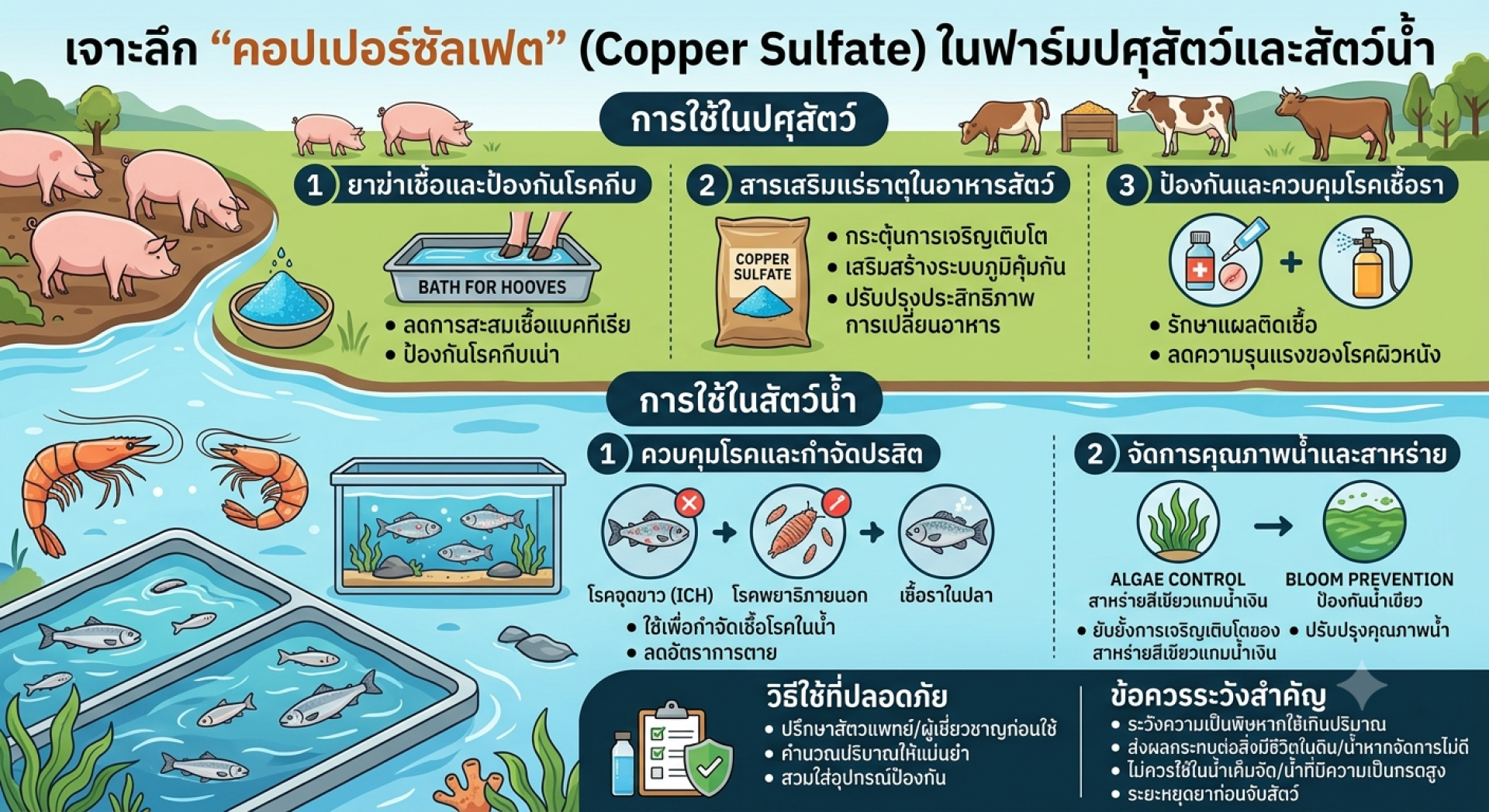
Nutritional Supplementation: Copper ($Cu$) is a vital trace mineral necessary for the immune system, growth, and hematopoiesis (blood cell formation) in both ruminants (cattle, buffaloes) and monogastric animals (swine, poultry).
- Growth Promotion: Integrating appropriate dosages into swine and broiler poultry feed enhances feed digestion efficiency and stimulates growth performance.
- Deficiency Prevention: Prevents copper deficiency disorders such as anemia, bone fragility, and alopecia (hair loss) in cattle and buffaloes.
Hoof Health and Disease Control (Foot Baths): Digital Dermatitis (hairy hoof warts) in dairy farms severely compromises milk yield.
- Utilizing a 3% - 5% copper sulfate aqueous solution in foot baths effectively eliminates pathogenic bacteria, accelerates wound healing, and controls the transmission of the disease within the herd.
Algae and Phytoplankton Control (Algaecide): Excessive cyanobacteria blooms (blue-green algae) in ponds cause critical nocturnal oxygen depletion. Precise application of copper sulfate effectively manages and stabilizes phytoplankton density.
Ectoparasite Eradication: Copper sulfate exhibits potent efficacy against protozoan ectoparasites, including Ichthyophthirius multifiliis (Ich/White Spot Disease) and monogenean flukes (gill/skin flukes), while reducing external bacterial loads on aquatic species.
3. Critical Warnings & Toxicity Risks
Despite its high utility, copper sulfate possesses high toxicity if miscalculated or misapplied:
Bioaccumulation and Toxicity:
- Terrestrial Animals: Sheep are exceptionally hypersensitive to copper toxicity. Excessive intake induces severe hepatic damage and acute hemolysis (destruction of red blood cells).
- Aquatic Animals: The therapeutic index (the margin between the therapeutic dose and the toxic dose) is extremely narrow. Minor calculation errors can result in mass mortality.
Water Quality Interdependencies (Crucial):
- The toxicity of copper sulfate is inversely proportional to Water Hardness and pH.
- Soft/Acidic Water (Low Hardness): Copper readily dissociates into free cupric ions (Cu2+), which are highly toxic. Never apply copper sulfate if total water hardness is below 50 mg/L.
- Hard/Alkaline Water (High Hardness): Copper precipitates rapidly, reducing its therapeutic and algaecidal efficacy. Dosages must be rigorously adjusted based on water hardness parameters.
Environmental and Soil Microbiome Impact: Repeated broadcasting of copper sulfate leads to heavy metal accumulation in bottom pond sediments. This disrupts beneficial benthic microorganisms (destroying natural bio-filtration systems) and poses a risk of biomagnification within the food chain.
Executive Summary for Entrepreneurs
The key to maximizing the cost-effectiveness and safety of Copper Sulfate in both livestock and aquaculture operations lies in "precise measurement and rigorous calculation." Whether conducting water chemistry analysis prior to pond treatment or strictly controlling dosage in livestock feed, systematic record-keeping and consultation with animal scientists or aquatic veterinarians are imperative. These practices significantly mitigate the risk of production losses and ensure the long-term, sustainable growth of your enterprise.