How to Choose Wastewater Treatment Chemicals
How to Choose Wastewater Treatment Chemicals Based on Factory Water Quality
Selecting the right Wastewater Treatment Chemicals is essential for maintaining efficient industrial wastewater treatment, controlling operating costs, and ensuring compliance with applicable effluent standards. Since wastewater characteristics vary depending on the manufacturing process, raw materials, and production activities, choosing chemicals based on actual water quality is a critical step toward achieving reliable treatment performance.
At Unching Industry, we understand that effective wastewater management requires more than selecting a chemical product. It involves understanding wastewater characteristics, identifying treatment objectives, and choosing suitable chemical solutions to support each facility's operational requirements.
Why Is Wastewater Quality Important When Selecting Treatment Chemicals?
Industrial wastewater may contain suspended solids, organic pollutants, oils, heavy metals, and other contaminants. The type and concentration of these substances influence the selection and dosage of treatment chemicals.
Key water quality parameters to consider include:
- pH: Influences chemical reactions and the performance of coagulants and other treatment chemicals.
- TSS (Total Suspended Solids): Indicates the concentration of suspended particles that may require coagulation, flocculation, or sedimentation.
- COD (Chemical Oxygen Demand): Measures the oxygen equivalent of chemically oxidizable substances in wastewater.
- BOD (Biochemical Oxygen Demand): Indicates the amount of oxygen required by microorganisms to break down biodegradable organic matter.
- Oil and Grease: May interfere with treatment processes and require appropriate separation or chemical treatment.
- Heavy Metals: May require specific precipitation or other treatment methods, depending on the metals present and discharge requirements.
Understanding these parameters helps industrial operators determine the appropriate treatment process and identify suitable chemicals for their wastewater.
How to Choose Wastewater Treatment Chemicals for Industrial Applications
Choosing the right chemicals requires a systematic assessment of wastewater quality, treatment objectives, and operating conditions.
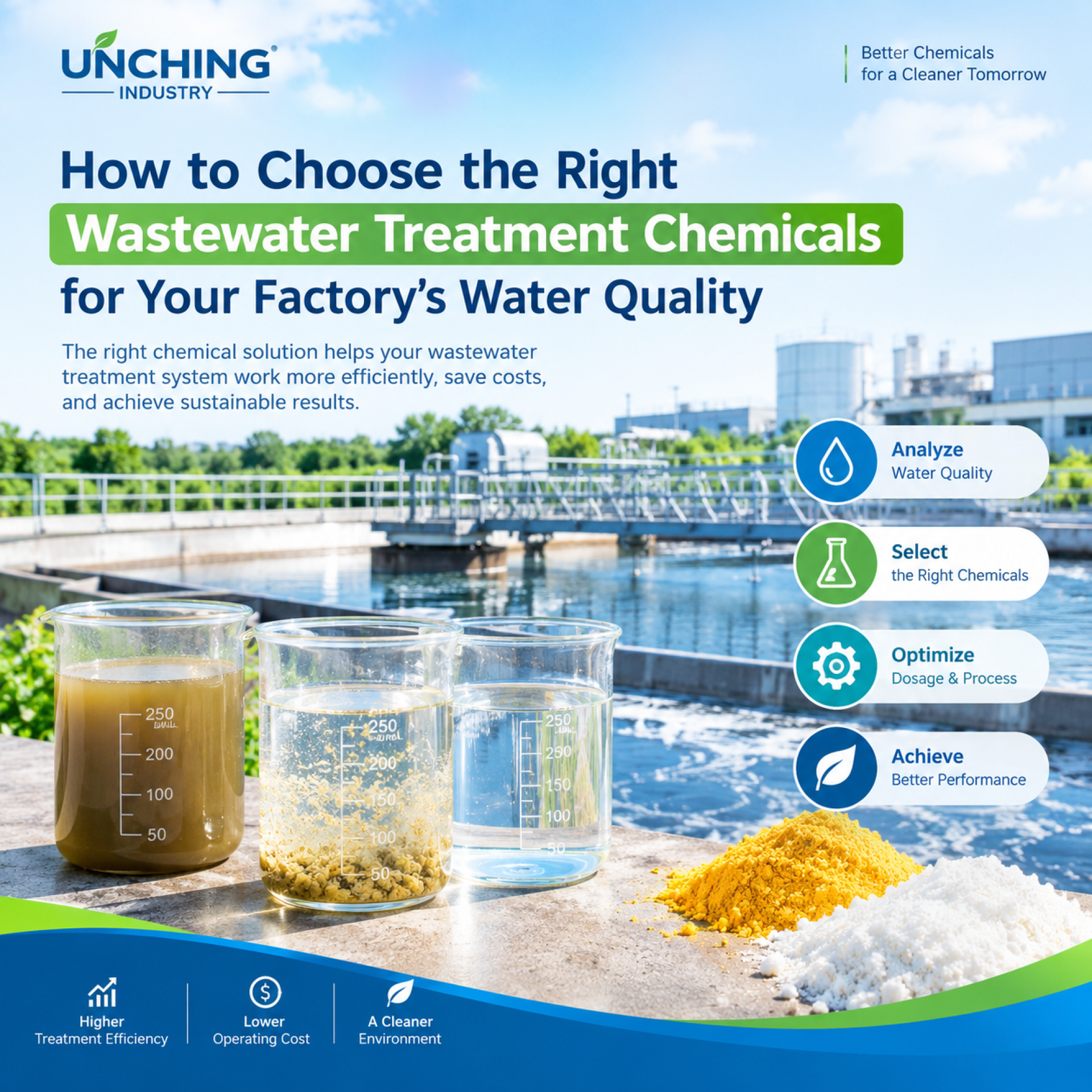
1. Analyze Wastewater Characteristics
Start by collecting representative wastewater samples and conducting laboratory tests. The results provide essential information about contaminant concentrations, pH, suspended solids, and other parameters relevant to the treatment process.
Wastewater analysis helps identify the main treatment challenges and reduces the risk of selecting chemicals that are unsuitable for the application.
2. Identify the Main Treatment Objective
Different wastewater problems require different treatment approaches. For example:
- High suspended solids may require coagulation, flocculation, and sedimentation.
- Wastewater containing certain dissolved metals may require chemical precipitation.
- High organic pollution may require biological treatment, chemical treatment, or a combination of processes, depending on the wastewater characteristics.
- Oil and grease may require physical separation, flotation, or other suitable treatment methods.
Identifying the primary treatment objective helps narrow down the available chemical options and supports more effective process design.
3. Select Suitable Coagulants and Flocculants
Coagulants and flocculants are widely used in industrial wastewater treatment to improve the removal of suspended particles and support solid-liquid separation.
PAC (Poly Aluminium Chloride) is an aluminium-based coagulant commonly used to destabilize suspended particles and promote the formation of aggregates. Its suitability depends on wastewater composition, pH, alkalinity, and operating conditions.
Ferric Chloride is an iron-based coagulant used in various wastewater treatment applications. It can support suspended solids removal, phosphorus removal, and certain precipitation processes when conditions are appropriate.
Flocculants help smaller particles form larger flocs, which can improve settling, flotation, or filtration performance. The appropriate flocculant depends on particle characteristics, the selected coagulant, and the separation process.
The best chemical is not necessarily the one that produces the fastest visible reaction. It should deliver suitable treatment performance while considering chemical consumption, sludge production, handling requirements, and overall operating costs.
4. Conduct a Jar Test Before Full-Scale Application
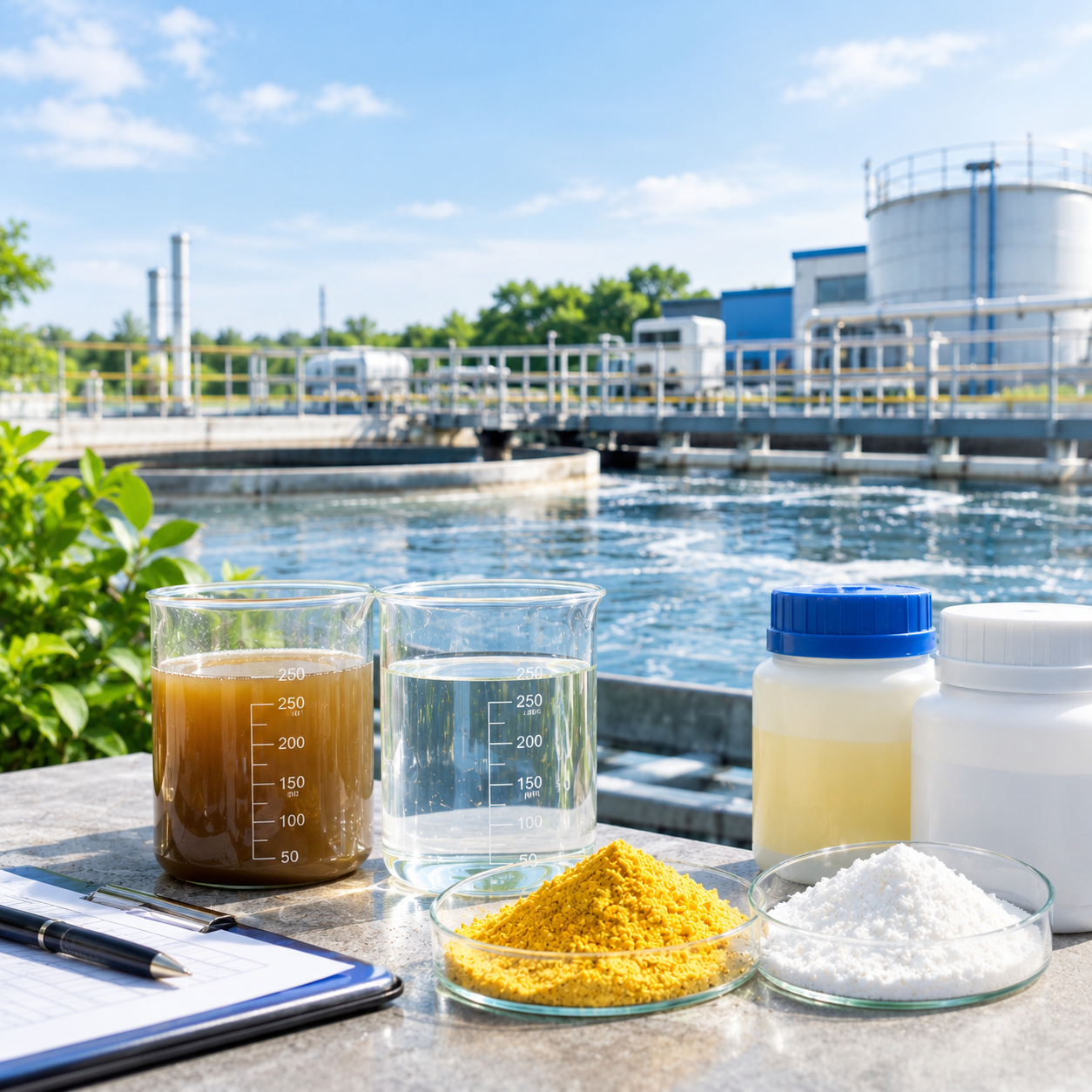
A Jar Test is a practical laboratory method for evaluating coagulants, flocculants, and chemical dosages before implementation in a treatment system.
During testing, different chemical types and dosages are applied to wastewater samples under controlled mixing conditions. Operators then compare floc formation, settling characteristics, water clarity, and other relevant performance indicators.
A properly conducted Jar Test can help facilities:
- Compare PAC, Ferric Chloride, and other suitable treatment chemicals.
- Determine an appropriate starting dosage for further optimization.
- Evaluate the influence of pH and other operating conditions.
- Assess sludge characteristics and separation performance.
- Reduce unnecessary chemical consumption through dosage optimization.
Jar Test results should be validated against the actual treatment process because full-scale conditions may differ from laboratory conditions.
5. Evaluate Total Treatment Costs
Chemical selection should consider overall treatment costs rather than purchase price alone.
Important factors include chemical dosage, treatment efficiency, sludge generation, equipment requirements, storage conditions, and the cost of sludge handling and disposal.
A chemical with a lower unit price may require a higher dosage or produce more sludge. Conversely, a higher-priced product may offer better overall value if it improves treatment performance and reduces other operating expenses.
The most suitable option is the one that meets treatment objectives reliably and economically under the facility's actual operating conditions.
6. Monitor and Optimize Treatment Performance
Wastewater quality can change with production schedules, raw materials, cleaning activities, and seasonal operating conditions. Regular monitoring helps ensure that the selected chemicals continue to perform effectively.
Facilities should review chemical dosage, pH, treated water quality, sludge characteristics, and relevant discharge parameters. Adjustments should be based on test results and operational data rather than fixed dosage assumptions alone.
Continuous optimization supports stable treatment performance, efficient chemical use, and more consistent wastewater management.
Common Wastewater Treatment Chemicals and Their Applications
| Chemical or chemical group | Typical application |
| PAC (Poly Aluminium Chloride) | Coagulation and suspended solids removal |
| Ferric Chloride | Coagulation, phosphorus removal, and selected precipitation applications |
| Coagulants | Destabilizing suspended particles to support separation |
| Flocculants | Promoting larger flocs for settling, flotation, or filtration |
| pH Adjustment Chemicals | Adjusting wastewater pH to support treatment reactions |
| Precipitation Chemicals |
Removing selected dissolved contaminants, including certain metals |
The appropriate product and dosage depend on wastewater characteristics, treatment objectives, process design, and applicable discharge requirements. Not every chemical is suitable for every wastewater stream.
Common Mistakes to Avoid When Choosing Wastewater Treatment Chemicals
Industrial facilities can improve treatment consistency by avoiding several common mistakes:
- Selecting chemicals without water quality testing: Wastewater composition varies, so assumptions may lead to poor performance.
- Using a fixed dosage for changing wastewater: Fluctuations in contaminant concentrations may require dosage adjustments.
- Ignoring pH and alkalinity: These conditions can significantly affect treatment efficiency.
Choosing products based only on price: Total operating costs and treatment outcomes are equally important. - Skipping Jar Tests: Laboratory testing helps compare options before full-scale application.
- Failing to monitor treated water: Regular testing is necessary to verify performance and identify process changes.
A structured selection process helps minimize these risks and supports more reliable industrial wastewater treatment.
How Unching Industry Can Support Your Wastewater Treatment Needs
Choosing the right Wastewater Treatment Chemicals starts with understanding the specific challenges of your wastewater. Factors such as contaminant concentrations, pH, treatment objectives, and existing equipment all influence the selection of an appropriate chemical solution.
Unching Industry provides industrial chemical solutions to support wastewater treatment and related industrial applications. By considering wastewater characteristics and operational requirements, facilities can make more informed decisions when evaluating PAC, Ferric Chloride, coagulants, flocculants, and other suitable treatment chemicals.
Contact Unching Industry to discuss your wastewater treatment requirements and explore chemical solutions suited to your industrial application.
Frequently Asked Questions (FAQs)
1. How do I choose the right wastewater treatment chemicals for my factory?
Start by analyzing wastewater quality, identifying the main contaminants, and defining the treatment objectives. Compare suitable chemicals through laboratory testing, such as a Jar Test, before optimizing dosage under actual operating conditions.
2. What is the difference between PAC and Ferric Chloride?
PAC is an aluminium-based coagulant, while Ferric Chloride is an iron-based coagulant. Both can support wastewater treatment, but their performance depends on wastewater composition, pH, dosage, and the treatment objective.
3. What is the purpose of coagulants in wastewater treatment?
Coagulants destabilize suspended particles so that they can combine into larger aggregates, making subsequent separation processes more effective.
4. What is the role of flocculants?
Flocculants help smaller particles and aggregates form larger flocs, which may improve settling, flotation, or filtration, depending on the process.
5. Why is a Jar Test important?
A Jar Test helps compare chemicals and dosages under controlled laboratory conditions. It provides a useful basis for selecting treatment chemicals before full-scale application.
6. How often should wastewater treatment chemical dosages be reviewed?
Dosages should be reviewed whenever wastewater quality, production conditions, or treatment performance changes. Routine monitoring and periodic testing help maintain effective treatment.
7. Can wastewater treatment chemicals reduce operating costs?
Yes. Appropriate chemical selection and dosage optimization may reduce unnecessary chemical consumption and improve separation performance. Actual savings depend on wastewater characteristics and operating conditions.
8. What information is needed before selecting wastewater treatment chemicals?
Useful information includes wastewater test results, pH, TSS, COD, BOD, relevant contaminants, daily wastewater volume, the existing treatment process, and the required effluent quality.
Conclusion
Choosing the right wastewater treatment chemicals is essential for achieving effective treatment, controlling operating costs, and maintaining consistent effluent quality. By analyzing water quality, identifying treatment objectives, conducting Jar Tests, and monitoring performance, factories can select suitable chemical solutions for their specific needs.
Unching Industry is ready to support industrial customers in evaluating wastewater treatment chemical options and identifying solutions aligned with their operational requirements.