What Is Industrial Waste? Types and Management Guide
What Is Industrial Waste? Types and Management Guide
Industrial production plays an essential role in economic growth, but manufacturing processes can also generate materials that are no longer needed or suitable for further use. These materials are commonly referred to as Industrial Waste.
Effective industrial waste management is more than simply disposing of unwanted materials. It involves identifying waste sources, reducing waste generation, segregating materials, applying appropriate treatment methods, recovering valuable resources, and ensuring proper disposal.
For modern manufacturers, responsible Industrial Waste Management is an important part of environmental management, operational efficiency, regulatory compliance, and sustainable business development.
This article explains What Is Industrial Waste, the main Types of Industrial Waste, and the importance of proper treatment, disposal, recycling, and waste reduction.
What Is Industrial Waste?
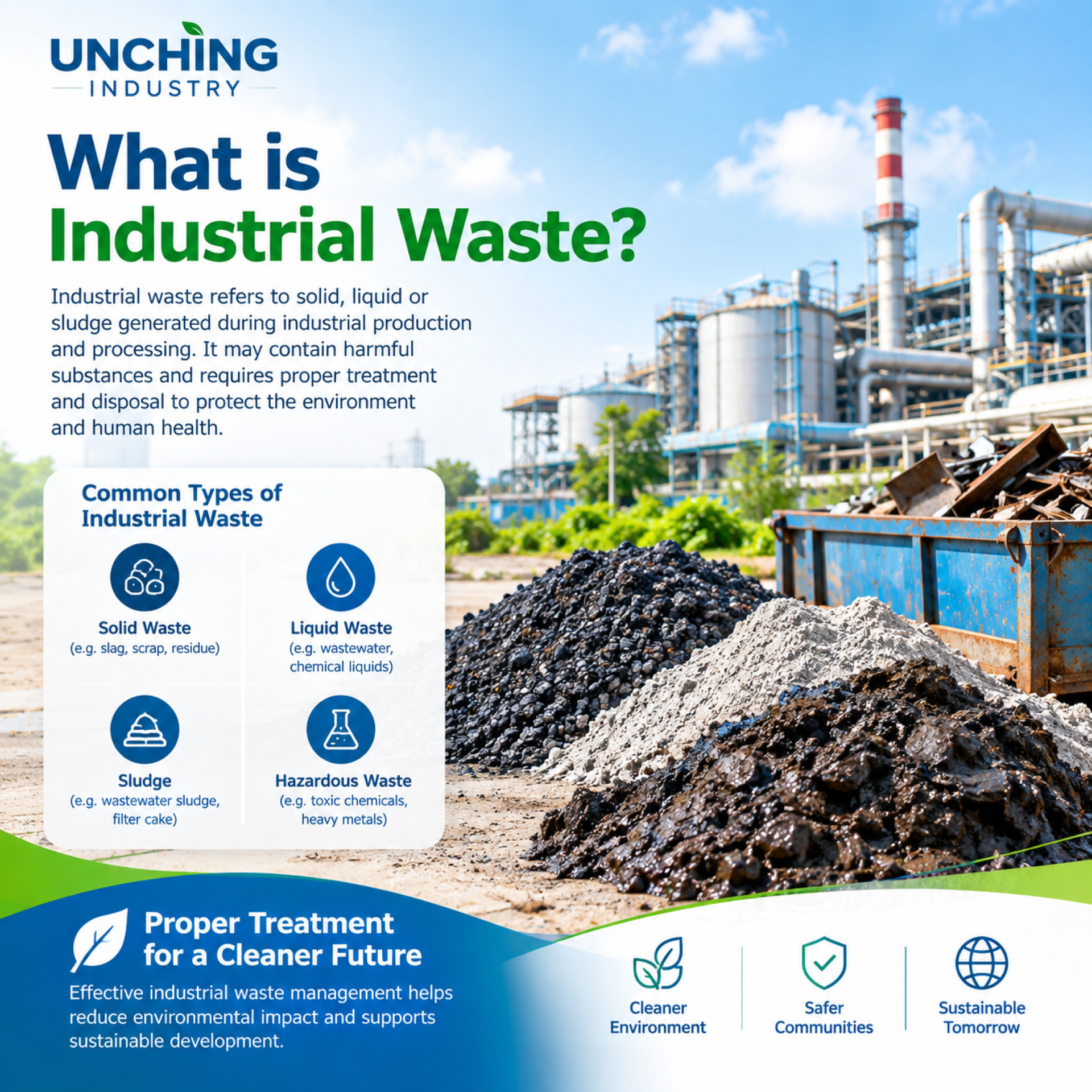
Industrial Waste refers to unwanted or discarded materials generated from industrial and manufacturing activities. Depending on the production process, industrial waste can occur in solid, liquid, sludge, or other forms.
Industrial waste may be generated from:
- Manufacturing and production processes
- Raw material preparation and processing
- Equipment maintenance
- Chemical processing
- Packaging and storage activities
- Industrial wastewater treatment
- Cleaning and facility operations
The characteristics of industrial waste can vary significantly depending on the industry, raw materials, manufacturing processes, and chemicals involved.
Understanding the source and characteristics of waste is the first step toward developing an effective Industrial Waste Management strategy.
Types of Industrial Waste
There are many ways to classify industrial waste. One important distinction is between Hazardous Industrial Waste and Non-Hazardous Industrial Waste.
Proper classification is essential because different types of waste require different handling, treatment, storage, recovery, and disposal approaches.
Hazardous Industrial Waste
Hazardous Industrial Waste is waste that may possess characteristics or contain substances that can create risks to human health, workplace safety, or the environment when improperly managed.
Examples may include:
- Certain chemical residues
- Used solvents
- Contaminated containers
- Certain used oils
- Materials containing hazardous substances
- Certain industrial sludges
Hazardous waste requires careful identification, segregation, storage, transportation, treatment, and disposal in accordance with applicable requirements.
A well-designed waste management system helps reduce the risk associated with improper handling and supports safer industrial operations.
Non-Hazardous Industrial Waste
Non-Hazardous Industrial Waste generally refers to industrial materials that do not exhibit hazardous characteristics but still require appropriate management.
Examples may include:
- Scrap metal
- Plastic materials
- Paper and cardboard
- Packaging materials
- Production residues
- Certain non-hazardous process materials
Some non-hazardous materials may have recovery or recycling potential. Proper segregation at the source can make it easier to identify materials that can be reused or recycled.
Where Does Industrial Waste Come From?
Industrial waste can be generated throughout the manufacturing value chain.
Manufacturing Waste
Manufacturing Waste may include production residues, rejected materials, off-specification products, and process by-products. Improving production efficiency can help reduce waste at its source.
Packaging and Storage Waste
Factories may generate packaging materials such as plastic, paper, containers, pallets, and other materials used to protect and transport raw materials or finished products.
Maintenance Waste
Maintenance activities can generate used oils, filters, contaminated cleaning materials, worn components, and other materials requiring appropriate management.
Wastewater Treatment Residues
Industrial wastewater treatment processes may produce sludge and other residues. These materials should be characterized and managed according to their properties and applicable requirements.
Identifying where waste originates allows manufacturers to develop targeted Industrial Waste Reduction and waste minimization strategies.
Why Is Industrial Waste Management Important?
Effective Industrial Waste Management can provide environmental, operational, and economic benefits for industrial organizations.
1. Reduce Environmental Impact
Proper waste management helps reduce the potential for contamination and uncontrolled release of waste into the environment.
2. Improve Resource Efficiency
Waste should not always be viewed as a material with no value. Some industrial materials can potentially be recovered, reused, or recycled.
3. Reduce Waste Management Costs
Reducing waste at the source can lower the volume of materials requiring treatment, transportation, and disposal.
4. Support Regulatory Compliance
A structured waste management system can help companies establish appropriate procedures for waste identification, segregation, storage, treatment, and disposal.
5. Strengthen Corporate Sustainability
Responsible waste management demonstrates an organization's commitment to environmental responsibility and sustainable industrial development.
Industrial Waste Management: From Waste Reduction to Disposal
A comprehensive Industrial Waste Management approach should focus on the entire waste lifecycle rather than disposal alone.
A practical framework may include:
Waste Prevention → Segregation → Reuse → Recycling → Treatment → Recovery → Proper Disposal
This approach allows companies to prioritize waste reduction and resource recovery before considering final disposal.
Waste Reduction
Industrial Waste Minimization begins by identifying the causes of waste generation and improving processes to reduce unnecessary material consumption.
Potential strategies include:
- Improving production efficiency
- Optimizing raw material usage
- Reducing process losses
- Improving inventory management
- Preventing material contamination
- Reusing suitable materials
Reducing waste at the source is often one of the most effective ways to improve overall waste management performance.
Waste Segregation
Proper segregation helps prevent different waste streams from becoming mixed unnecessarily.
Waste can be separated according to its characteristics, source, composition, and intended management method. Effective segregation can also improve the potential for recycling and resource recovery.
Industrial Waste Treatment
Industrial Waste Treatment involves applying suitable processes to manage or reduce specific characteristics of waste before recovery or final disposal.
The appropriate treatment technology depends on factors such as:
- Waste composition
- Physical and chemical characteristics
- Waste volume
- Contaminant concentration
- Treatment objectives
- Applicable environmental requirements
Depending on the waste stream, treatment approaches may include physical, chemical, biological, stabilization, or other specialized processes.
Selecting the appropriate treatment method requires a clear understanding of the waste characteristics and the desired treatment outcome.
Industrial Waste Disposal
Industrial Waste Disposal should be considered when waste cannot be effectively reused, recovered, or recycled.
Disposal methods must be selected according to the type and characteristics of the waste. Hazardous and non-hazardous waste may require different management approaches.
Proper disposal helps minimize environmental risks and supports responsible industrial operations.
Companies should work with qualified and authorized service providers where required and maintain appropriate documentation throughout the waste management process.
Industrial Waste Recycling and Resource Recovery
Industrial Waste Recycling is an important component of sustainable waste management.
Materials such as metals, plastics, paper, packaging, and selected production residues may have opportunities for recycling or recovery, depending on their condition and composition.
Recycling can help:
- Reduce the volume of waste sent for disposal
- Conserve natural resources
- Reduce demand for virgin materials
- Improve resource efficiency
- Support Circular Economy principles
However, recycling should always be based on appropriate material assessment and suitable processing methods.
Industrial Waste and the Circular Economy
The traditional approach to waste management often focuses on collecting and disposing of waste after it has been generated.
A Circular Economy approach takes a broader perspective by seeking to keep materials and resources in productive use for as long as possible.
For industrial organizations, this can mean:
Reduce → Reuse → Recover → Recycle → Optimize Resources
By integrating waste reduction and resource recovery into production planning, companies can move toward more sustainable manufacturing models.
Building an Effective Industrial Waste Management System
A successful Industrial Waste Management System should be designed around the specific needs of each industrial operation.
Key considerations include:
Waste Characterization
Understand the physical and chemical characteristics of each waste stream.
Source Identification
Identify where and why waste is generated within the production process.
Segregation and Storage
Establish appropriate procedures for separating and storing different waste streams.
Treatment and Recovery
Evaluate suitable treatment, reuse, recycling, and recovery opportunities.
Final Disposal
Ensure residual waste is managed through appropriate disposal methods.
Continuous Improvement
Monitor waste generation and management performance to identify opportunities for further improvement.
This systematic approach can help organizations improve operational efficiency while strengthening their environmental performance.
Industrial Waste Management Solutions for Modern Industry
Every industrial facility has different processes, materials, production conditions, and environmental challenges. Therefore, there is no single Industrial Waste Management Solution that is suitable for every application.
A professional approach should begin with understanding the specific process and waste characteristics before selecting the appropriate management strategy.
At Unching Industry, we recognize the importance of combining technical knowledge, industrial experience, and environmental responsibility to support more efficient and sustainable industrial operations.
Our expertise in industrial chemicals, water treatment chemicals, and environmental management solutions allows us to support industrial customers in addressing complex operational and environmental challenges.
Why Choose Unching Industry?
With decades of experience in industrial solutions, Unching Industry focuses on delivering reliable products and solutions designed around the needs of industrial customers.
Our approach emphasizes:
- Technical expertise
- Reliable industrial solutions
- Quality and consistency
- Environmental responsibility
- Operational efficiency
- Sustainable industrial development
- Long-term customer success
Conclusion
Industrial Waste is an important consideration for every manufacturing organization. Understanding What Is Industrial Waste, where it comes from, and how it should be classified is the foundation of responsible waste management.
An effective approach goes beyond Industrial Waste Disposal. It should prioritize waste reduction, proper segregation, treatment, resource recovery, and Industrial Waste Recycling wherever practical.
By adopting a structured Industrial Waste Management strategy, manufacturers can reduce environmental risks, improve resource efficiency, support compliance, and move toward more sustainable industrial operations.
At Unching Industry, we are committed to supporting industries with reliable chemical, water treatment, and environmental solutions that contribute to operational efficiency and sustainable growth.
Build a cleaner, more efficient, and more sustainable industrial future with Unching Industry.
Frequently Asked Questions (FAQ)
1. What is Industrial Waste?
Industrial Waste refers to unwanted or discarded materials generated from manufacturing, production, maintenance, processing, packaging, and other industrial activities.
2. What are the main Types of Industrial Waste?
Industrial waste can be classified in different ways. Common categories include hazardous and non-hazardous waste, as well as solid waste, liquid waste, sludge, and specific process residues.
3. What is Hazardous Industrial Waste?
Hazardous Industrial Waste is waste that may have characteristics or contain substances capable of causing risks to human health, safety, or the environment if improperly managed.
4. What is Non-Hazardous Industrial Waste?
Non-Hazardous Industrial Waste generally refers to industrial waste that does not exhibit hazardous characteristics. Examples can include certain scrap metals, plastics, paper, packaging, and production materials.
5. How can Industrial Waste be reduced?
Industrial Waste can be reduced by improving production efficiency, optimizing raw material usage, preventing process losses, reusing suitable materials, and implementing effective waste segregation.
6. What is Industrial Waste Treatment?
Industrial Waste Treatment involves using suitable physical, chemical, biological, stabilization, or other processes to manage specific waste characteristics before recovery or disposal.
7. Can Industrial Waste be recycled?
Yes. Certain industrial waste streams may be suitable for reuse, recycling, or resource recovery depending on their composition, condition, and applicable requirements.
8. Why is Industrial Waste Management important?
Effective Industrial Waste Management can help reduce environmental impact, improve resource efficiency, reduce waste-related costs, support regulatory compliance, and contribute to sustainable industrial development.