What Is an Industrial Wastewater Treatment System? Learn in 1 Minute
What Is an Industrial Wastewater Treatment System? Learn in 1 Minute
As environmental regulations continue to evolve, businesses are placing greater emphasis on sustainable manufacturing and responsible water management. An Industrial Wastewater Treatment System has become a critical component of modern industrial operations, helping factories protect the environment while improving production efficiency and regulatory compliance.
If you have ever wondered what an Industrial Wastewater Treatment System is, this quick guide explains everything you need to know in just one minute.
What Is an Industrial Wastewater Treatment System?
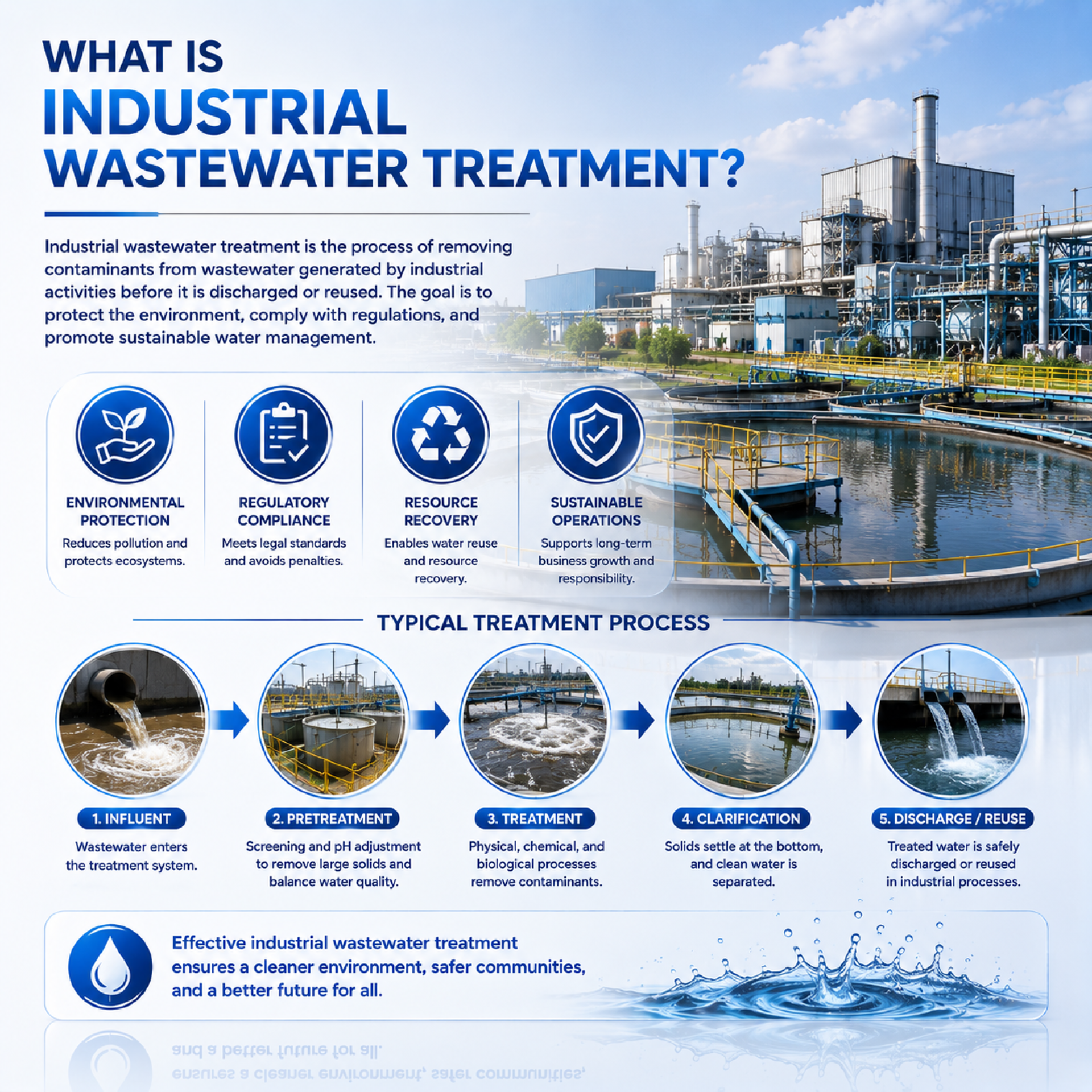
An Industrial Wastewater Treatment System is an engineered process designed to remove contaminants, suspended solids, organic matter, chemicals, heavy metals, and other pollutants from wastewater generated during industrial production.
The objective of Industrial Wastewater Treatment is to ensure that treated water meets environmental discharge standards or can be safely reused within manufacturing processes, supporting sustainable water management and resource conservation.
Today, industrial wastewater treatment systems are no longer simply regulatory requirements—they are strategic investments that help manufacturers reduce environmental impact, improve operational performance, and strengthen long-term business sustainability.
How Does an Industrial Wastewater Treatment System Work?
A typical Wastewater Treatment System combines multiple treatment stages to effectively purify industrial wastewater.
These stages generally include:
- Screening and removal of large debris
- Equalization and pH adjustment
- Chemical coagulation and flocculation
- Biological treatment
- Sedimentation and sludge separation
- Filtration and final disinfection
Together, these processes significantly reduce contaminants such as suspended solids, COD, BOD, color, oils, and other industrial pollutants before water is discharged or recycled.
Types of Industrial Wastewater Treatment Systems
Depending on the characteristics of the wastewater, Industrial Wastewater Treatment Systems generally fall into three categories.
Physical Treatment
Physical treatment removes large particles and suspended solids through screening, filtration, flotation, and sedimentation. It serves as the foundation of most treatment processes.
Chemical Treatment
Chemical treatment uses coagulants and flocculants to destabilize contaminants and promote sedimentation. Common chemicals include:
- Ferric Chloride
- Poly Aluminium Chloride (PAC)
- Polymers
- pH Adjustment Chemicals
Chemical treatment is widely applied across manufacturing industries due to its efficiency in removing suspended solids, phosphorus, heavy metals, and color.
Biological Treatment
Biological treatment utilizes beneficial microorganisms to decompose biodegradable organic matter, making it highly effective for reducing BOD and COD in wastewater from food, beverage, agricultural, and processing industries.
Why Is Industrial Wastewater Treatment Important?
Implementing an effective Industrial Wastewater Treatment System provides numerous operational and environmental benefits, including:
- Compliance with environmental regulations
- Reduced environmental impact
- Lower operational risks and penalties
- Improved water reuse and recycling
- Increased production efficiency
- Enhanced corporate sustainability performance
- Stronger ESG and environmental responsibility initiatives
- Improved corporate reputation and stakeholder confidence
As sustainability becomes a competitive advantage, investing in reliable Industrial Wastewater Treatment solutions enables businesses to operate more responsibly while supporting long-term growth.
Selecting the Right Treatment Chemicals
The performance of any Industrial Wastewater Treatment System depends not only on system design but also on selecting the appropriate treatment chemicals.
Commonly used chemicals include:
- Ferric Chloride
- Poly Aluminium Chloride (PAC)
- Polymers
- pH Control Chemicals
Selecting the right chemical solution depends on wastewater characteristics, contaminant levels, treatment objectives, and discharge requirements. Proper chemical selection helps improve treatment efficiency while reducing operating costs.
Conclusion
An Industrial Wastewater Treatment System is an essential investment for modern manufacturing facilities. By combining physical, chemical, and biological treatment processes, businesses can effectively remove contaminants, comply with environmental regulations, reduce operating costs, and support sustainable industrial development.
At Unching Industry, we provide high-quality water treatment chemicals and professional technical support tailored to a wide range of industrial applications. Whether your facility requires optimized Industrial Wastewater Treatment, chemical treatment solutions, or expert consultation, our experienced team is committed to helping you achieve greater operational efficiency and environmental performance with confidence.