What Is SDS? A Guide to Chemical Safety Data Sheets
What Is SDS? A Guide to Chemical Safety Data Sheets
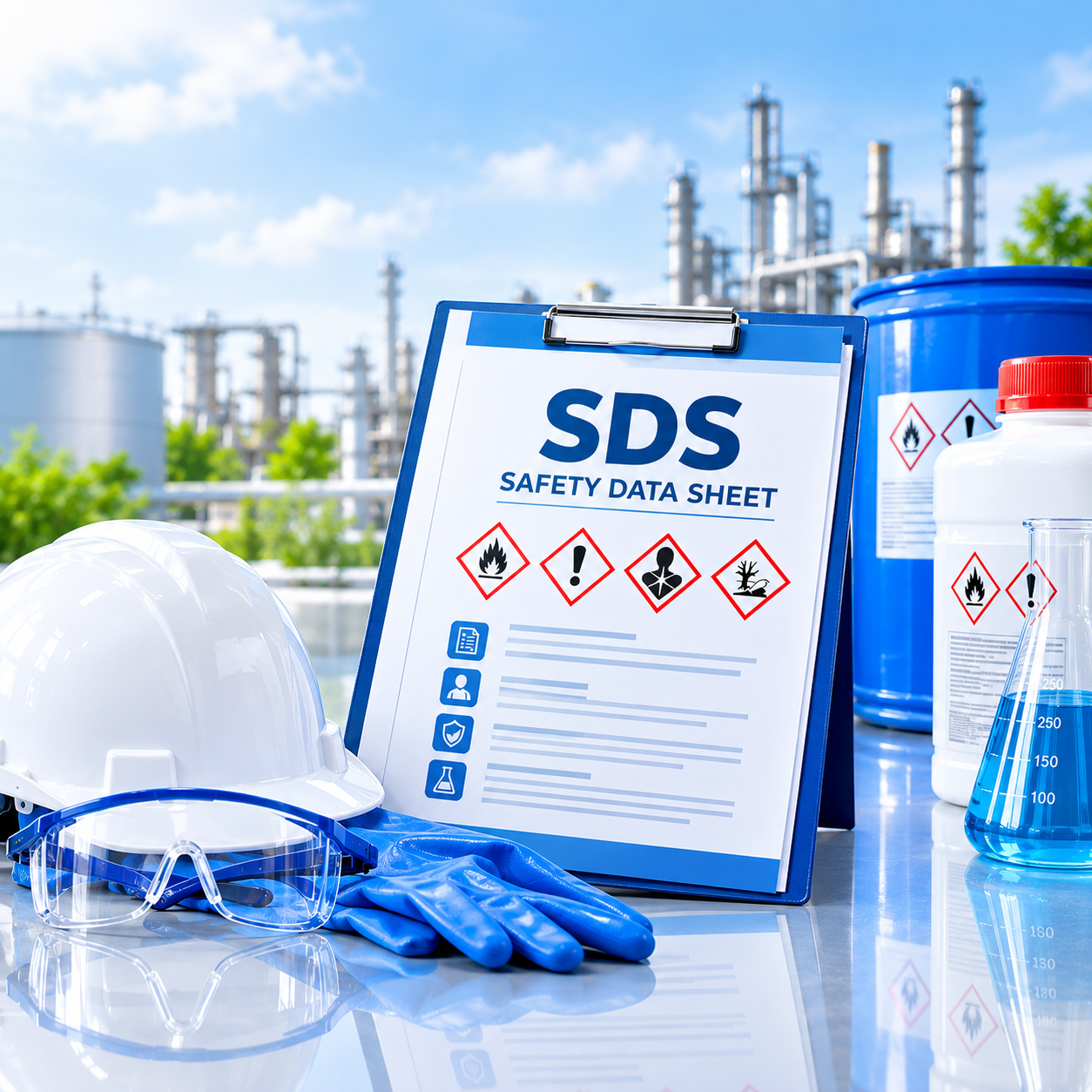
In industrial and chemical operations, chemical safety is essential for protecting employees, facilities, products, and the environment. One of the most important documents used to communicate chemical hazards and safe handling practices is the Safety Data Sheet (SDS).
But What is SDS, and why is it important for factories, workplaces, and businesses that handle chemicals?
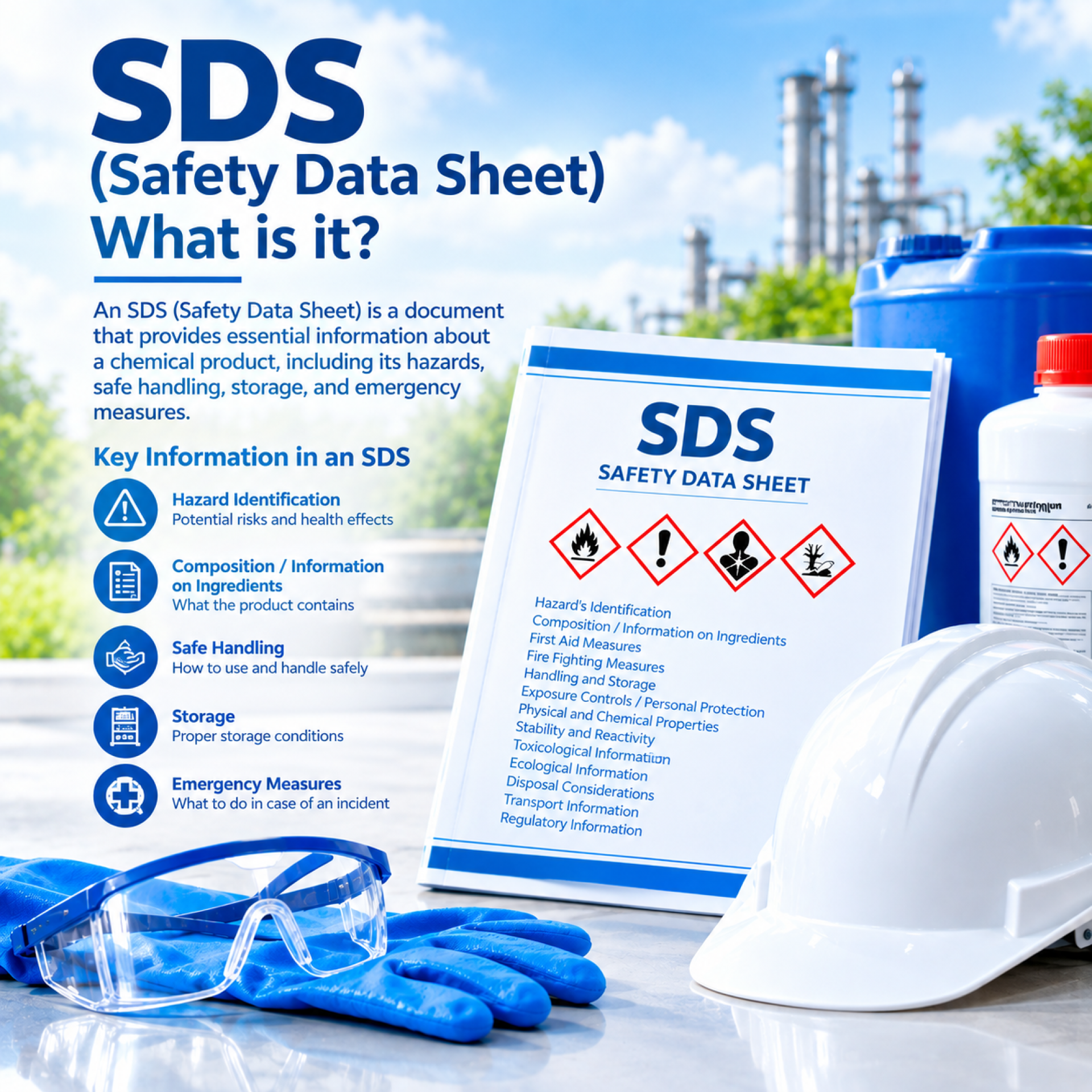
A Safety Data Sheet provides essential information about a chemical product, including its hazards, composition, safe handling, storage requirements, emergency measures, and environmental considerations. Understanding SDS information enables businesses and workers to make informed decisions and manage chemical risks more effectively.
For industries that regularly use chemical products, knowing What is a Safety Data Sheet is an important part of maintaining a safe and well-managed workplace.
What Is SDS?
SDS stands for Safety Data Sheet. It is a standardized document designed to communicate important information about a chemical substance or mixture.
An SDS helps workers, safety professionals, emergency responders, and businesses understand how a chemical should be handled, stored, transported, and managed.
A typical Chemical Safety Data Sheet contains information such as:
- Chemical identification and product information
- Hazard classification
- Chemical composition
- First-aid measures
- Fire-fighting measures
- Accidental release procedures
- Safe handling and storage
- Exposure controls and personal protection
- Physical and chemical properties
- Stability and reactivity
- Toxicological information
- Ecological information
- Disposal considerations
- Transport information
- Regulatory information
By providing this information in a structured format, SDS documents support better chemical risk management throughout the product lifecycle.
Why Is an SDS Important?
For organizations working with industrial chemicals, an SDS is more than a technical document. It is an important communication tool that supports workplace safety and operational control.
1.Supports Safe Chemical Handling
SDS information explains potential hazards and recommended precautions, helping workers understand how to handle chemical products properly.
2.Helps Prevent Workplace Incidents
Understanding chemical properties, incompatibilities, exposure risks, and appropriate protective measures can help reduce the likelihood of accidents.
3. Provides Emergency Information
In the event of accidental exposure, spills, or fires, SDS information can help workers and emergency personnel identify appropriate response procedures.
4. Supports Chemical Storage
Different chemicals may have specific storage requirements. SDS information can help businesses establish suitable storage conditions and identify potential incompatibilities.
5. Supports Regulatory and Safety Management
Maintaining appropriate SDS documentation can support workplace chemical management programs and help organizations meet applicable safety and regulatory requirements.
Understanding the SDS 16 Sections
One of the most important things to know when learning How to Read an SDS is the standard 16-section structure.
Although the exact regulatory requirements may vary by jurisdiction, the internationally recognized SDS format is generally organized into 16 sections.
Section 1: Identification
Provides basic information about the chemical product, including:
- Product identifier
- Recommended use
- Supplier information
- Emergency telephone number
Section 2: Hazard Identification
Describes the hazards associated with the chemical, including hazard classification, signal words, hazard statements, and precautionary statements where applicable.
Section 3: Composition / Information on Ingredients
Provides information about hazardous ingredients or components contained in the product.
Section 4: First-Aid Measures
Explains recommended first-aid procedures following exposure through routes such as inhalation, skin contact, eye contact, or ingestion.
Section 5: Fire-Fighting Measures
Provides information about suitable extinguishing media, specific hazards, and protective equipment for firefighters.
Section 6: Accidental Release Measures
Describes appropriate procedures for responding to spills or accidental releases, including precautions and containment methods.
Section 7: Handling and Storage
Provides recommendations for safe handling and suitable storage conditions.
Section 8: Exposure Controls / Personal Protection
Includes occupational exposure limits, engineering controls, and recommended personal protective equipment such as gloves, eye protection, or respiratory protection.
Section 9: Physical and Chemical Properties
Provides important characteristics such as appearance, odor, pH, melting point, boiling point, flash point, solubility, and other relevant properties.
Section 10: Stability and Reactivity
Explains chemical stability, hazardous reactions, conditions to avoid, and incompatible materials.
Section 11: Toxicological Information
Provides information about potential health effects and routes of exposure.
Section 12: Ecological Information
Provides information concerning environmental effects and potential ecological hazards.
Section 13: Disposal Considerations
Provides recommendations regarding the disposal of chemical products and contaminated materials.
Section 14: Transport Information
Contains information relevant to the transportation of the chemical, including applicable transport classifications.
Section 15: Regulatory Information
Provides information regarding relevant chemical safety, health, and environmental regulations.
Section 16: Other Information
Contains additional information such as preparation or revision dates and other relevant notes.
How to Read an SDS Effectively
Knowing How to Read an SDS can help workers quickly identify the most important safety information.
For routine operations, it is useful to focus first on the following sections:
Section 1 – Identification
Confirm the product name and supplier information.
Section 2 – Hazard Identification
Understand the primary hazards and required precautions.
Section 4 – First-Aid Measures
Know what to do in the event of exposure.
Section 7 – Handling and Storage
Review safe handling and storage requirements.
Section 8 – Exposure Controls / Personal Protection
Identify appropriate protective measures and PPE.
Section 10 – Stability and Reactivity
Check incompatible materials and conditions that should be avoided.
Section 13 – Disposal Considerations
Review appropriate disposal practices.
This approach allows employees to locate critical information efficiently without having to read the entire document every time.
SDS vs MSDS: What Is the Difference?
The terms SDS and MSDS are sometimes used interchangeably, but they are not exactly the same.
MSDS stands for Material Safety Data Sheet. It was widely used in the past to provide information about chemical hazards.
SDS, or Safety Data Sheet, is the standardized format that replaced the traditional MSDS approach in many regulatory systems and is associated with the Globally Harmonized System of Classification and Labelling of Chemicals (GHS).
One of the key improvements of the SDS format is its standardized 16-section structure, making chemical safety information easier to locate and understand.
Therefore, when discussing modern chemical safety documentation, SDS is generally the preferred terminology.
What Is GHS and How Does It Relate to SDS?
GHS, or the Globally Harmonized System of Classification and Labelling of Chemicals, provides an internationally recognized framework for classifying chemical hazards and communicating them through labels and safety documentation.
The GHS approach helps standardize hazard communication across countries and industries.
An SDS supports this system by presenting important information about chemical hazards, protective measures, emergency response, and other safety considerations in a structured format.
However, specific implementation requirements can vary by country and regulatory authority. Businesses should therefore ensure that their SDS documentation meets the applicable local requirements.
SDS for Chemicals in Industrial Operations
For factories and industrial facilities, SDS for Chemicals plays an important role in day-to-day chemical management.
Businesses may use SDS information when:
- Selecting appropriate PPE
- Establishing chemical storage procedures
- Training employees
- Preparing emergency response procedures
- Assessing workplace chemical risks
- Managing chemical inventories
- Reviewing transportation requirements
- Developing spill response procedures
- Supporting environmental and safety management systems
For companies handling water treatment chemicals, industrial chemicals, and other specialized chemical products, accurate and accessible SDS documentation can help strengthen overall operational safety.
SDS and Chemical Safety Management
Effective Chemical Safety requires more than simply keeping SDS documents on file.
Organizations should establish a systematic approach to chemical management, including:
1.Identify chemical products used within the facility.
2.Maintain current SDS documentation for applicable products.
3.Make SDS information accessible to relevant employees.
4.Train employees on chemical hazards and safe handling.
5.Use appropriate PPE and engineering controls.
6.Establish emergency and spill response procedures.
7.Review chemical storage and compatibility requirements regularly.
This integrated approach can help organizations build a stronger safety culture while supporting efficient industrial operations.
How Unching Industry Supports Chemical Safety
At Unching Industry, chemical solutions are supplied with a focus on quality, reliability, technical support, and responsible industrial operations.
Understanding the properties and appropriate use of chemical products is an important part of effective chemical management. SDS documentation provides valuable information that helps customers and relevant personnel make informed decisions regarding handling, storage, and safety procedures.
For businesses looking for reliable chemical solutions and professional technical guidance, selecting an experienced chemical supplier can be an important part of building a well-managed chemical operation.
Unching Industry is committed to supporting customers with chemical solutions that align with their operational requirements and contribute to safer, more efficient, and responsible industrial processes.
Frequently Asked Questions About SDS
1.What is SDS?
SDS stands for Safety Data Sheet. It provides important information about a chemical product, including hazards, handling, storage, emergency response, and other safety considerations.
2.What is a Safety Data Sheet used for?
A Safety Data Sheet is used to communicate essential safety information about chemicals and help workers and organizations manage chemical-related risks.
3.How many sections are in an SDS?
A standard SDS is generally organized into 16 sections, covering chemical identification, hazards, handling, storage, emergency response, toxicology, transportation, and regulatory information.
4.What is the difference between SDS and MSDS?
MSDS means Material Safety Data Sheet, while SDS means Safety Data Sheet. SDS is the more standardized format associated with modern GHS-based hazard communication.
5.What does GHS mean?
GHS stands for the Globally Harmonized System of Classification and Labelling of Chemicals, an international framework for communicating chemical hazards.
6.How should I read an SDS?
Start with Sections 1, 2, 4, 7, 8, and 10 to identify the product, hazards, emergency measures, handling, PPE, and chemical reactivity.
7. Why is SDS important in factories?
SDS information supports chemical handling, storage, employee training, emergency response, PPE selection, and workplace chemical risk management.
8. Where can I get SDS information for chemical products?
SDS documents are typically provided by the chemical manufacturer or supplier. Users should ensure that the document applies to the specific product and is current and appropriate for their location and intended use.
Conclusion
Understanding What is SDS is an essential part of responsible chemical management. A Chemical Safety Data Sheet provides structured information that helps businesses and workers understand chemical hazards, safe handling procedures, storage requirements, emergency measures, and other important safety considerations.
By learning the SDS 16 Sections, understanding How to Read an SDS, and recognizing the relationship between SDS vs MSDS and GHS, organizations can improve chemical safety practices and support more efficient industrial operations.
For reliable chemical solutions and professional support, Unching Industry is ready to provide products and technical guidance suited to your industrial requirements.
Learn more about chemical solutions and industrial chemical products at www.unching.com.