Ferric Chloride vs PAC: Which Coagulant Is Better?

Ferric Chloride vs PAC: Which Coagulant Is Better for Wastewater Treatment?
In modern industrial wastewater treatment, selecting the right coagulant chemical is essential for achieving efficient water clarification, reducing treatment costs, and maintaining stable system performance. Among the most commonly used Water Treatment Chemicals, Ferric Chloride and PAC (Poly Aluminium Chloride) are widely recognized for their excellent coagulation and flocculation performance.
Many industries often ask: “Ferric Chloride or PAC, which is better?” The answer depends on wastewater characteristics, treatment objectives, operating conditions, and specific industrial requirements.
This article explains the Ferric Chloride vs PAC Difference, comparing their properties, advantages, applications, and suitability to help you choose the right solution for your wastewater treatment system.
What Is Ferric Chloride?
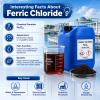
Ferric Chloride (FeCl₃) is an iron-based inorganic coagulant widely used in Ferric Chloride Water Treatment applications. It works by neutralizing suspended particles, organic matter, and impurities in wastewater, allowing them to form larger flocs that can be easily separated through sedimentation or filtration.
Ferric Chloride is commonly applied in:
- Industrial wastewater treatment plants
- Municipal wastewater treatment
- Sludge conditioning processes
- Heavy metal removal
- PCB manufacturing and metal surface treatment industries
As a high-performance Coagulant Chemical, Ferric Chloride provides strong coagulation capability, especially in wastewater containing high levels of suspended solids, phosphorus, and organic contaminants.
What Is PAC (Poly Aluminium Chloride)?
PAC (Poly Aluminium Chloride) is an aluminum-based coagulant commonly used as a PAC Water Treatment Chemical for water purification and wastewater treatment.
PAC works by destabilizing suspended particles and forming flocs that can be separated from water. Compared with traditional aluminum sulfate, PAC generally offers better efficiency, faster reaction, and lower sludge production in many applications.
PAC is widely used in:
- Drinking water treatment
- Industrial wastewater treatment
- Paper manufacturing
- Food processing wastewater
- Chemical and textile industries
Due to its versatility and stable performance, PAC has become one of the most popular coagulants in modern water treatment systems.
Ferric Chloride vs PAC: Key Differences
Understanding the Ferric Chloride and PAC Comparison helps industries select the most suitable chemical for their treatment process.
1.Chemical Composition
The main difference between Ferric Chloride and PAC is their active metal component:
| Chemical | Main Component |
| Ferric Chloride | Iron (Fe³⁺) based coagulant |
| PAC | Aluminum (Al³⁺) based coagulant |
Ferric Chloride is an iron-based solution, while PAC uses polymerized aluminum compounds to improve coagulation performance.
2. Coagulation Performance
When comparing Ferric Chloride vs PAC for Wastewater Treatment, both chemicals provide effective coagulation, but their performance varies depending on wastewater conditions.
Ferric Chloride advantages:
- Excellent removal of suspended solids
- Effective phosphorus removal
- Strong performance in industrial wastewater
- Suitable for wastewater with high organic loads
PAC advantages:
- Fast floc formation
- Good water clarification performance
- Lower sludge generation in many applications
- Effective across a wide pH range
Ferric Chloride vs PAC for Wastewater Treatment: Which One Should You Choose?
There is no single answer to “Ferric Chloride or PAC Which Is Better?” because each chemical has different strengths.
Choose Ferric Chloride when:
- Treating industrial wastewater with high contamination levels
- Removing phosphorus or heavy metals
- Improving sludge dewatering performance
- Working with wastewater containing complex pollutants
Ferric Chloride is often preferred for heavy-duty industrial applications where strong coagulation performance is required.
Choose PAC when:
- High water clarity is the main objective
- A lower sludge volume is preferred
- The treatment system requires stable operation
- Treating general industrial or municipal wastewater
PAC is commonly selected when operational flexibility and efficient clarification are important.
Best Coagulant for Wastewater Treatment: Ferric Chloride or PAC?
The Best Coagulant for Wastewater Treatment depends on several factors, including:
- Wastewater characteristics
- pH conditions
- Suspended solids concentration
- Treatment process design
- Required water quality standards
- Operating cost considerations
Professional wastewater treatment providers usually recommend conducting a jar test before selecting the final chemical solution. This helps determine the optimal dosage and ensures maximum treatment efficiency.
How to Select the Right Water Treatment Chemical Supplier
Choosing a reliable Ferric Chloride Supplier or PAC Supplier is as important as selecting the right chemical.
A professional supplier should provide:
- Consistent product quality
- Technical consultation
- Reliable delivery system
- Proper documentation and safety information
- Customized solutions for industrial applications
With extensive experience in chemical manufacturing and wastewater treatment solutions, Unching Industry provides high-quality Ferric Chloride, PAC, and Water Treatment Chemicals designed to support industrial customers with reliable and sustainable solutions.
Conclusion: Ferric Chloride vs PAC – Choosing the Right Solution
Both Ferric Chloride and Poly Aluminium Chloride (PAC) are highly effective coagulants used in wastewater treatment. The best choice depends on your specific treatment requirements, wastewater characteristics, and operational goals.
Ferric Chloride offers strong performance for complex industrial wastewater and pollutant removal, while PAC provides excellent clarification efficiency and operational flexibility.
By understanding the Ferric Chloride PAC Difference, industries can make better decisions, improve wastewater treatment performance, and achieve more sustainable water management.
For businesses seeking reliable Water Treatment Solutions, Unching Industry delivers professional chemical solutions with quality assurance, technical expertise, and long-term industry experience.