Best Practices for Using Copper Sulfate in Shrimp Ponds
Copper Sulfate in Shrimp Farming: Best Practices for Safe and Effective Application
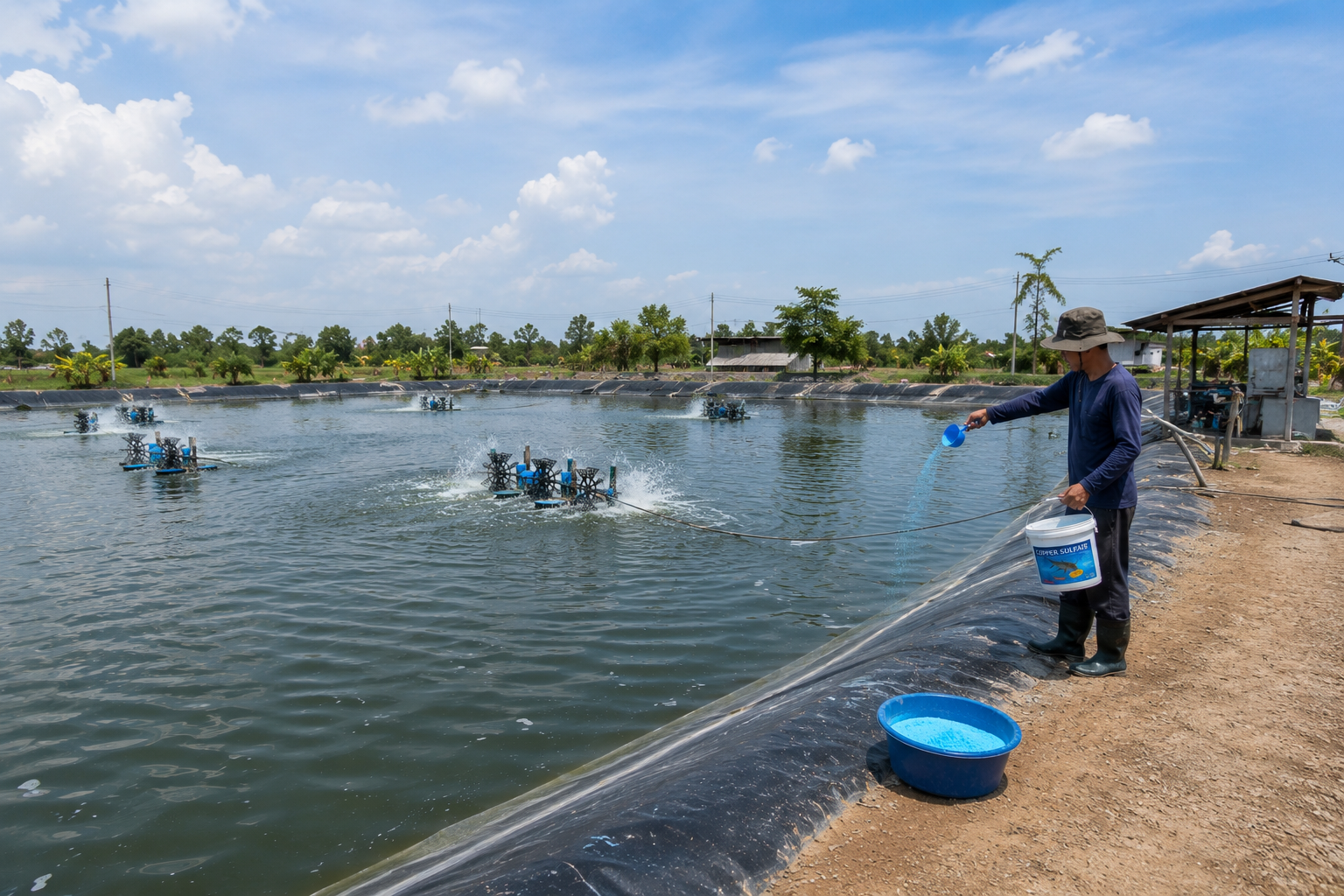
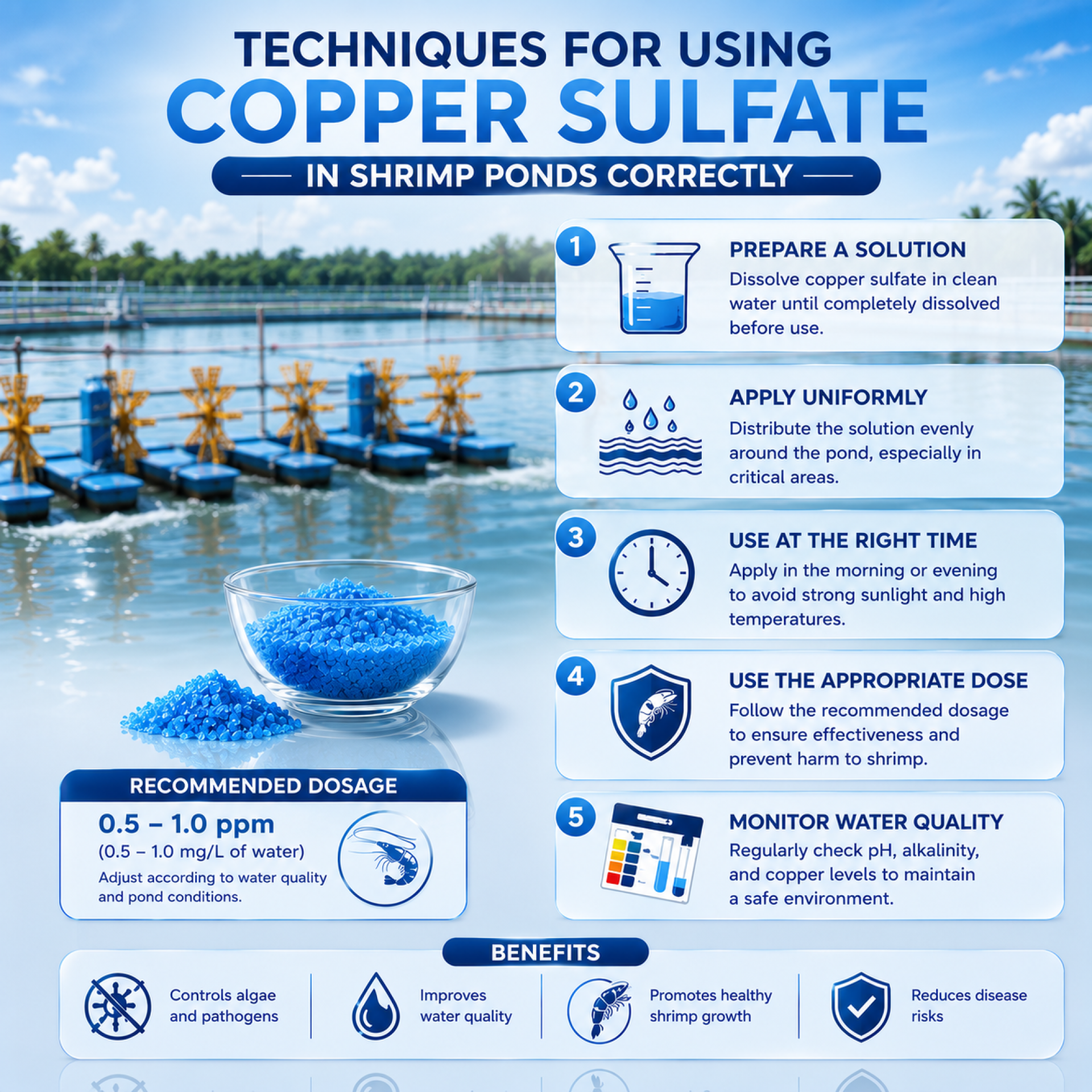
Copper Sulfate has long been recognized as an effective water treatment solution in aquaculture and is widely used in shrimp farming for a variety of management purposes. When applied correctly and at scientifically recommended dosages, it can help improve water quality, support pond management, and enhance overall farming efficiency while minimizing environmental impact.
Common Applications of Copper Sulfate in Shrimp Ponds
Copper Sulfate is commonly used in aquaculture to:
- Control blue-green algae (cyanobacteria), a major cause of unpleasant taste and odor in cultured aquatic species.
- Treat certain parasitic and bacterial diseases affecting aquatic animals.
- Control unwanted snails and other nuisance organisms in culture ponds.
- Improve overall pond management by maintaining a healthier aquatic environment.
Safe Application Rate Based on Water Alkalinity
The safe application rate of Copper Sulfate Pentahydrate (CuSO₄·5H₂O) in shrimp ponds is generally calculated according to the pond's total alkalinity.
A widely accepted guideline recommends using:
Safe dosage (mg/L) = 0.01 × Total Alkalinity (mg/L as CaCO₃)
For example:
Total Alkalinity = 100 mg/L
Maximum recommended Copper Sulfate dosage = 1.0 mg/L
Equivalent elemental copper concentration ≈ 0.25 mg/L
When applied within these recommended limits, Copper Sulfate is generally considered safe for shrimp culture.
Copper Concentration Naturally Declines After Treatment
Studies have shown that dissolved copper concentrations decrease rapidly following application. In pond environments, copper levels typically return close to their pre-treatment concentrations within 48 to 72 hours due to natural precipitation, sediment adsorption, and other environmental processes.
Research conducted in ictalurid catfish ponds in Alabama, USA, also demonstrated that dissolved copper concentrations often remain below the theoretical maximum concentration of approximately 0.25 mg/L following recommended applications.
Copper: An Essential Trace Element for Shrimp Health
Copper is not only an effective pond management tool—it is also an essential micronutrient required by both plants and animals.
In shrimp, copper plays a critical biological role as a component of cuproenzymes, which catalyze numerous metabolic reactions essential for normal growth and physiological function.
More importantly, copper is an integral part of hemocyanin, the oxygen-transport protein found in shrimp and other crustaceans. Hemocyanin binds oxygen and enables efficient oxygen transport throughout the body, performing a function similar to that of iron in hemoglobin found in vertebrates.
Without adequate copper, many vital biological processes cannot function normally.
Responsible Use Supports Sustainable Aquaculture
Copper Sulfate has been widely used around the world for decades to control nuisance algae responsible for off-flavors and undesirable odors in aquaculture systems.
While it is impossible to guarantee that any chemical application is entirely free from environmental or food safety concerns under all circumstances, current scientific evidence indicates that responsible and properly managed Copper Sulfate applications can be safely incorporated into aquaculture operations.
The key to sustainable use lies in following established best management practices, including:
- Apply Copper Sulfate only when treatment is genuinely necessary.
- Calculate dosage based on total alkalinity rather than estimating by pond volume alone.
- Avoid overdosing, especially in ponds with low alkalinity.
- Monitor water quality before and after treatment.
- Follow local regulations and consult aquaculture specialists whenever appropriate.
Best Practice for Long-Term Pond Management
Copper Sulfate should be viewed as one component of a comprehensive pond management strategy rather than a routine treatment. Combining proper water quality monitoring, balanced feeding programs, aeration management, and scientifically calculated Copper Sulfate applications can help maintain healthier ponds, improve shrimp performance, and support sustainable aquaculture production.
At Unching Industry Co., Ltd., we are committed to providing high-quality Copper Sulfate solutions manufactured under strict quality control standards. Our products are designed to support professional aquaculture operations with reliable performance, consistent quality, and responsible application practices that contribute to long-term productivity and environmental stewardship.
Disclaimer: The information provided in this article is intended for educational purposes only. Actual application rates should always be determined based on pond conditions, water quality parameters, shrimp species, and local regulations. Farmers are encouraged to consult aquaculture professionals before applying any chemical treatment.